
Deutsch: Floristik / Español: Floricultura / Português: Floricultura / Français: Floriculture / Italiano: Floricoltura
Floriculture in the industrial context refers to the cultivation of flowering and ornamental plants for gardens, decorative purposes, and for use in the floral industry. This branch of horticulture involves intensive crop management, breeding of new varieties, and post-harvest technology to ensure the longevity and quality of the plants. Floriculture encompasses a range of plants including potted flowers, cut cultivated greens, cut flowers, and bedding plants.
Application Areas
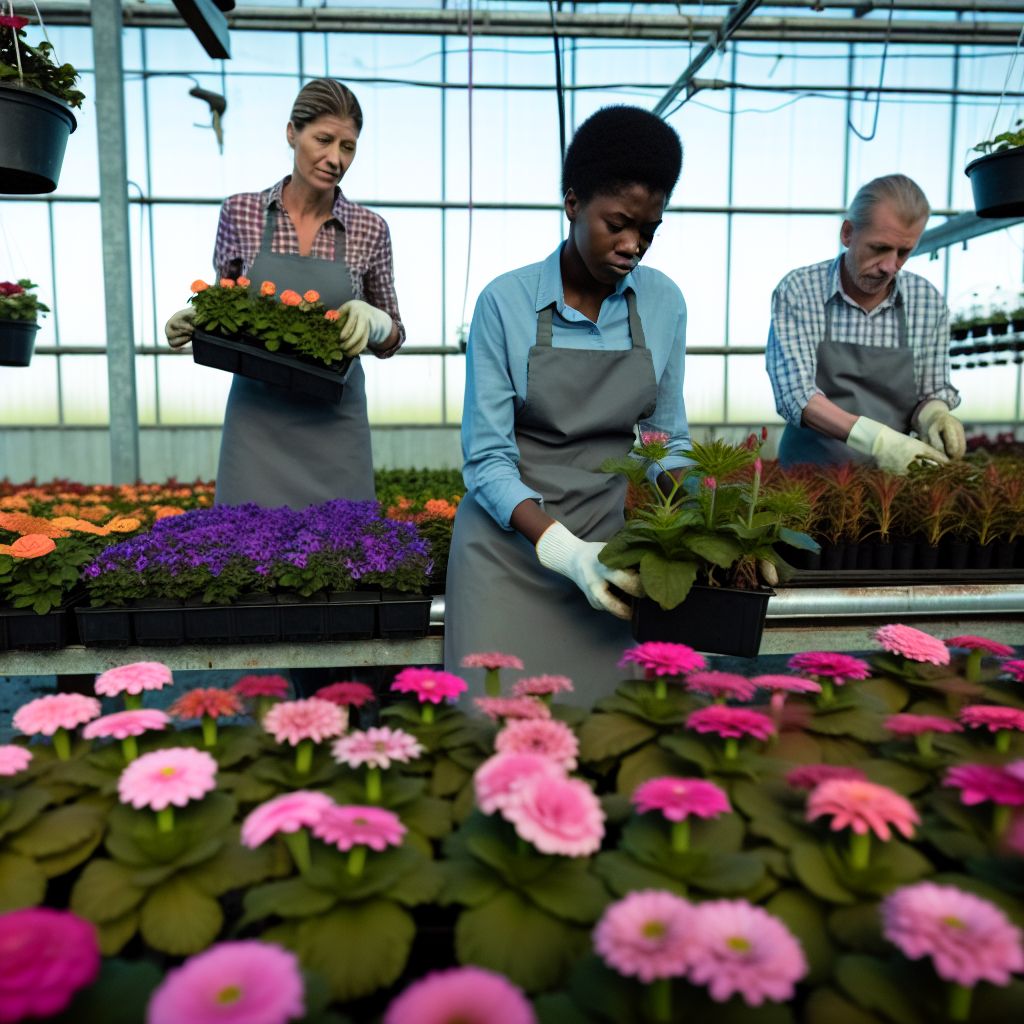
- Production of Cut Flowers: Growing flowers for bouquets and arrangements.
- Nursery Operations: Cultivating potted plants and ornamentals.
- Landscape Designing: Supplying plants for landscaping and urban beautification.
- Genetic Engineering: Developing new plant varieties with desired traits.
- Event and Floral Design: Providing flowers for events, weddings, and interior decoration.
Examples
- The Netherlands Flower Market: Known for its vast tulip cultivation and global flower trading.
- Colombian Rose Farms: Significant exporters of roses and other cut flowers.
- California Nurseries: Producing a wide range of ornamental plants and flowers.
- Japanese Chrysanthemum Cultivation: Known for artistic and specialized flower breeding.
- Ecuadorian Orchid Production: A leading country in the production and export of orchids.
Risks
- Pest and Disease Outbreaks: Can devastate entire crops.
- Climate Sensitivity: Vulnerability to climate change and weather conditions.
- Market Fluctuations: Prices can be highly volatile due to seasonal Demand.
- Labor-Intensive: Requires significant manpower for cultivation and harvesting.
- Environmental Impact: Use of pesticides and water resources.
Recommendations and Usage
Adopting sustainable practices, such as integrated pest management and efficient water usage, is recommended. Staying informed about market trends and consumer preferences can also aid in crop selection and business strategies.
History and Legal Basics
Floriculture has roots in ancient civilizations but saw significant growth with global trade expansion in the 19th and 20th centuries. Legal aspects include international trade regulations, quarantine laws to prevent disease spread, and intellectual property rights in plant breeding.
Examples of Sentences
- The floriculture industry is a major contributor to the country's economy.
- Advances in floriculture have led to the creation of numerous hybrid species.
- The floriculture expo showcased the latest trends in flower arrangement.
- Floriculture's demand peaks around holidays like Valentine's Day and Mother’s Day.
Similar Terms
- Horticulture
- Botany
- Garden Design
- Plant Breeding
- Landscaping
Articles with 'Floriculture' in the title
- Nursery and Floriculture Production: Nursery and Floriculture Production- this industry comprises establishments primarily engaged in- 1. Growing nursery and floriculture products (eg. nursery stock, shrubbery, cut flowers, flower seeds, foliage plants) under cover or in open . . .
Summary
Floriculture is a dynamic and aesthetically-driven industry focused on the cultivation of flowers and ornamental plants. It plays a significant role in the agricultural sector, contributing to economic growth, employment, and environmental sustainability. The industry faces challenges like climate change and market variability but continues to evolve with technological advancements and sustainable practices.
--
Related Articles to the term 'Floriculture' | |
| 'Agriculture' at quality-database.eu | ■■■■■■■■■■ |
| Agriculture in the quality management context refers to the systematic approach to managing farming practices . . . Read More | |
| 'Fluid Dynamics' at quality-database.eu | ■■■■■■■■■ |
| Fluid Dynamics: Fluid dynamics is a branch of physics concerned with the study of fluids (liquids, gases, . . . Read More | |
| 'Germany' | ■■■■■■■■ |
| Germany in the industrial and industry context is recognized as a powerhouse of engineering, innovation, . . . Read More | |
| 'Structure' | ■■■■■■■■ |
| Structure in an industrial context refers broadly to the physical framework, organization, or arrangement . . . Read More | |
| 'Aerospace Industry' at quality-database.eu | ■■■■■■■■ |
| Aerospace Industry in the quality management context refers to the sector involved in the design, production, . . . Read More | |
| 'Architecture' at quality-database.eu | ■■■■■■■■ |
| Architecture in the context of quality management refers to the structured design and organization of . . . Read More | |
| 'Activation' at quality-database.eu | ■■■■■■■■ |
| Activation in the context of quality management refers to the process of initiating and implementing . . . Read More | |
| 'Boeing' at quality-database.eu | ■■■■■■■■ |
| Boeing in the Quality management context refers to the aerospace company’s approach to maintaining . . . Read More | |
| 'Airbus' at quality-database.eu | ■■■■■■■■ |
| Airbus in the Quality management context refers to the global aerospace company\'s approach to ensuring . . . Read More | |
| 'Adoption' at quality-database.eu | ■■■■■■■■ |
| Deutsch: / Español: Adopción / Português: Adoção / Français: Adoption / Italiano: Adozione Adoption . . . Read More | |